The scale
The global scam economy generates more than $1 billion annually. People in more than 80 countries have been targeted.

Sanctions in the borderlands · Karen State, Myanmar
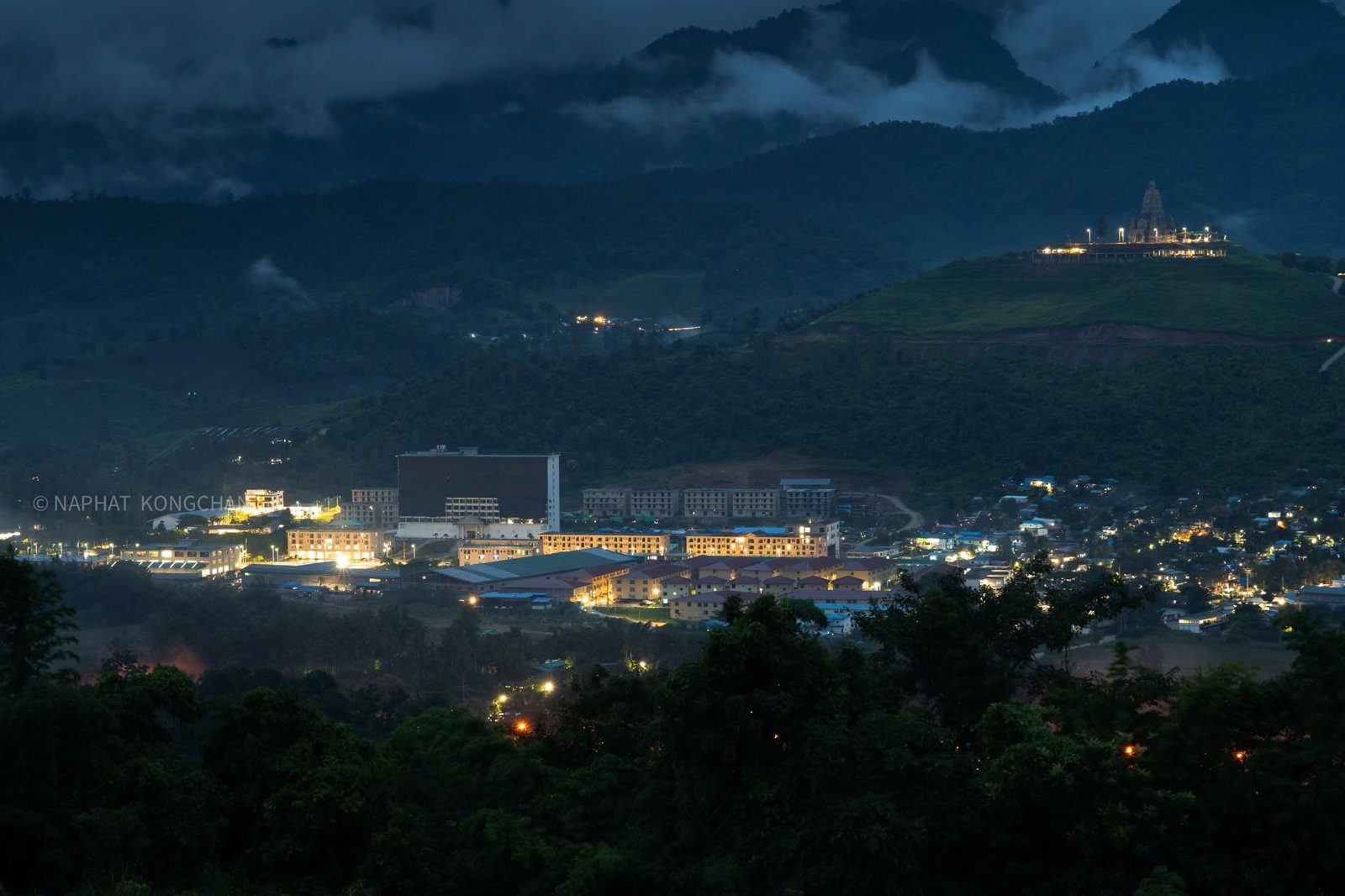
Along the Thai–Myanmar border, scam compounds the size of small towns became the target of sanctions, power cuts and demolitions after sanctions were imposed. Buildings came down – but the scam simply relocated elsewhere.
This is how sanctions – and sanctions evasions – reshaped the scam economy of Karen State: who protected it, who supplied it, and who paid the price.
Kyauk Khat (Tai Chang), Myanmar, 15 August 2026. Photo © Naphat Kongchan.
The scale
The global scam economy generates more than $1 billion annually. People in more than 80 countries have been targeted.
A significant portion of this activity originates from localized, heavily fortified scam compounds in Myanmar, Cambodia, and Laos.
Many of those running the scams are victims themselves, trafficked into the compounds and forced to defraud others.
Where
The industry's centre of gravity shifted to Myawaddy, in Myanmar's Karen State, across the Moei River from Mae Sot in Thailand.
Casino and "new city" projects of the late 2010s were turned over to online fraud during Covid. After the 2021 coup, conflict and lawlessness in the borderlands let them grow to city scale.
Pushed south
In late 2023, China-backed pressure, including Operation 1027 and crackdowns in northern Shan State, pushed operators out of the north. Many moved south to the Thai border, where armed groups already aligned with Myanmar's military offered land and protection.
Who holds the ground
Shwe Kokko and KK Park grew on land held by the Karen Border Guard Force, rebranded the Karen National Army (KNA) in 2024 but still aligned with the military, and by the allied DKBA. Control along the border is layered: militia, junta, Karen National Union (KNU) and mixed areas sit side by side.
Hardware, not software
The armed groups, such as the KNA and DKBA, provide the hardware for these centres: land, armed security, construction and logistics, transport, and stakes in front companies.
Sanctioning scam facilitators
From December 2023, the UK, EU and US named commanders, companies and finally whole armed groups associated with the scam economy. The UK listed Saw Chit Thu. The EU added the Chit Linn Myaing group. The US designated the KNA as a transnational criminal organisation in May 2025, and then the DKBA in November.
What the sanctions were meant to do
Sanctions aimed to freeze assets, cut off revenue from land leases and protection, dismantle the "scam cities", end forced labour, and disrupt the power, fuel and logistics behind the compounds. The measures also aimed to weaken militias that fight alongside Myanmar's military.
The demolitions
Late in 2025, bulldozers moved into KK Park. Myanmar Witness verified at least 109 structures destroyed at KK Park II by 23 November, and found that official claims overstated the demolition. But scam centre leaders had advance notice.

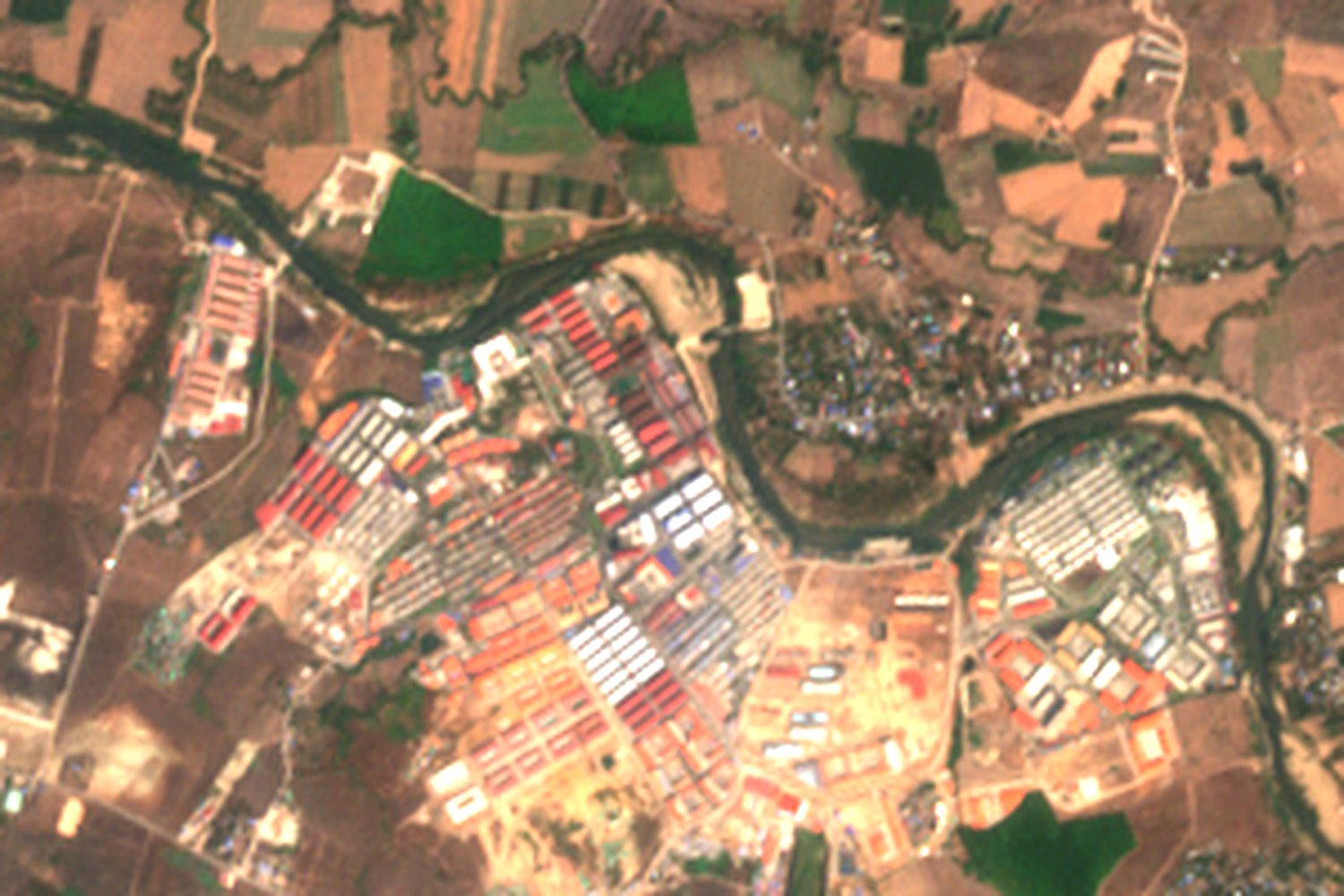
Sentinel-2 imagery, 10 m resolution: individual buildings cannot be counted at this scale. Bright areas show cleared ground and rubble. Contains modified Copernicus Sentinel data (2025–2026). Drag to compare.
Dispersal
Operations merely moved on. Smaller clusters appeared at Thit-Ka-Ti, Waw Lay, Three Pagodas, and inland toward Sone Sie Myaing, the DKBA headquarters. Some sit on KNU-administered ground.
Shwe Kokko itself was recruiting again by early 2026.
Inside the new sites
The new sites are less visible but recognisable: rows of single-storey houses around Waw Lay, and prefabricated units reported to arrive from China ready to assemble.
Ordinary supply lines
Rebuilding requires cement, generators, food and fuel. Truck drivers and traders described goods arriving from China through Thailand's ports, then by road to the border, often as declared "transit goods".
Private crossings
Along the river, large plots were rented or bought to create discreet crossing points. Walled compounds on the Thai side screen the movement of materials, and newly built roads on the Myanmar side link directly to village roads in Thailand. These routes bypass the known crossings that face occasional checks.

Who gained
Some actors were well placed to profit from the move. The DKBA hosts many of the new sites. The KNA kept land, checkpoints and rents. Myanmar's military, which created these militias, remains off scam-related sanctions lists. Brokers, transporters and suppliers found new demand.
The relationships that sustained the business — armed protection, land and supply — largely held. The scam industry adapted.
Residents, caught twice
The heaviest costs fell on people who had nothing to do with the fraud. Residents bore costs from the compounds and from the measures to stop them. Agents pressed owners to sell or lease farmland. New checkpoints barred some from gathering firewood. Then power, internet and fuel cuts, border closures and frozen bank accounts hit households and patients, even where no scam sites existed.
About this research
This story draws on XCEPT research by the Centre on Armed Groups: interviews and observation in Karen State and the Thai border area in 2026, legal and official records, and independent monitoring. Locations are approximate. Respondents are anonymised to protect their safety.
Read the full paper (link to come)
Images Opening photo © Naphat Kongchan (permission pending). Satellite imagery: contains modified Copernicus Sentinel data (2025–2026). Field photos: XCEPT field data collection, June 2026.
Maps Natural Earth; geoBoundaries (CC BY 4.0). Positions and areas are approximate and generalised.
XCEPT and funder logos and statement · to be added

